
The term ‘medical marijuana’ is about to turn 50.
It was first used in the case of Washington DC resident Robert Randall who convinced the federal government in November 1976 to give him cannabis to ease eye pressure caused by glaucoma.

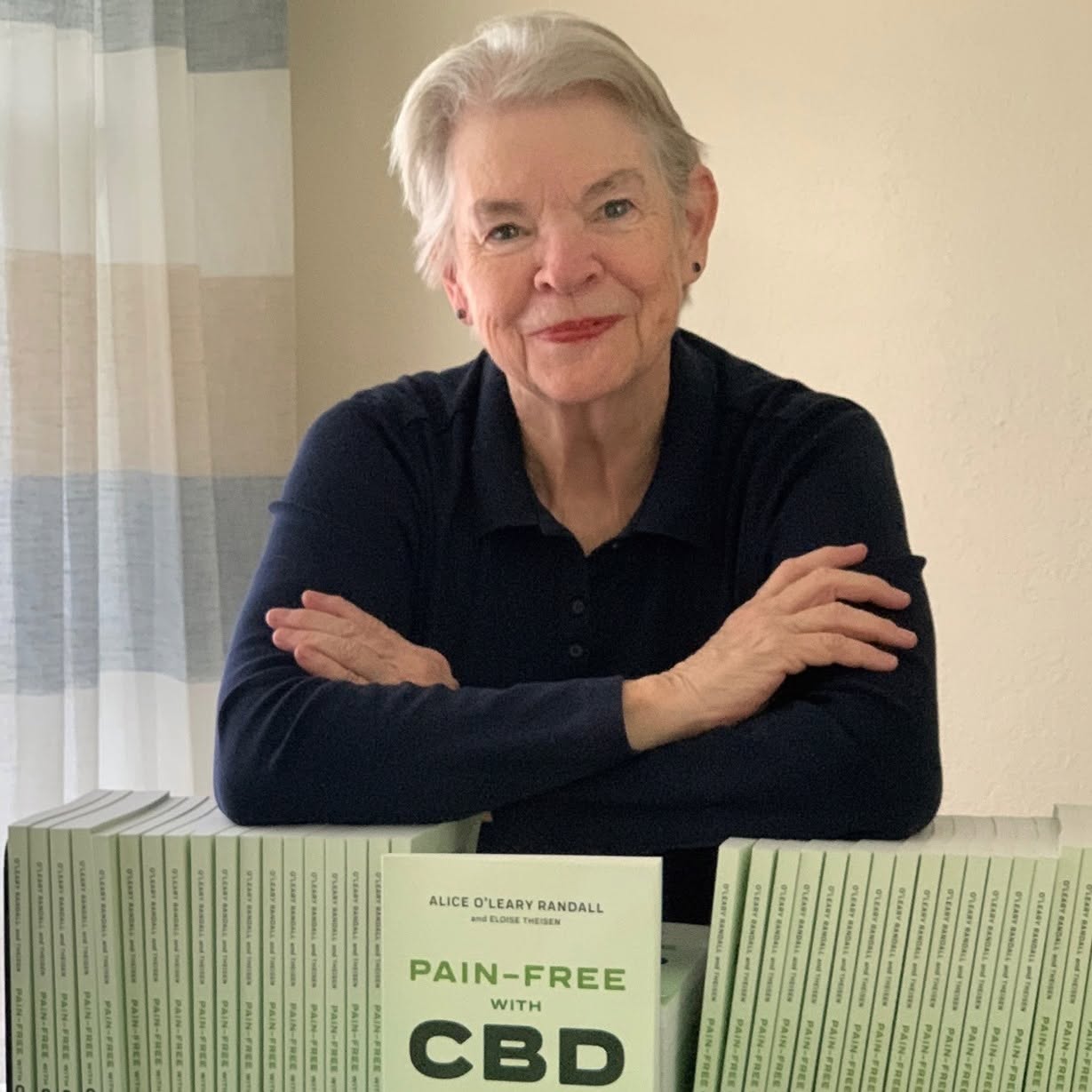
He and his wife, Alice O’Leary Randall, made it their life’s work since tto take on the US government with the goal of expanding that same access to every other patient who might benefit. It’s been a journey, as they say. Robert passed away in 2001, but Alice has continued his work in advocating medical cannabis.
Here she is interviewed by Nushin Rashidian of Cannabis Wire Weekly, on the current confusion characterizing the US cannabis industry, particularly the issues arising from cannabis rescheduling and ‘intoxicating hemp’
Nushin Rashidian: Right now, there are two things that everyone’s talking about in the world of cannabis. It’s either rescheduling or it’s intoxicating hemp, which is ridiculous because it’s basically cannabis, but that’s a whole separate conversation. But it feels to me that people are talking about rescheduling and this is coming to fruition, potentially, without a whole lot of appreciation for the ways in which this has been 50-plus years in the making. What is your view on what’s happening today with rescheduling in the context of everything that you’ve seen, been through and done?
Alice O’Leary Randall: Well, that’s a big question, Nushin.
NR: I know, I know.
AOR: Well, no, I’m glad, because I keep pushing it behind me. And I don’t want to think about it because it’s so extraordinarily complex to me at this point. On the surface, rescheduling seems pretty simple. You move marijuana out of Schedule I and down to Schedule II, III, IV, V, whatever. And the government has convoluted it so completely that I just find myself, you know, I just shut down because I can’t deal with how they’re continuing this charade of making cannabis so complex. It boggles my mind to the point that it shuts down. Does that make any sense?
NR: Oh, believe me, yeah.
AOR: It’s like when I first found out that the THC molecule in cannabis, the plant, is still Schedule I, but the THC in Marinol, which is the same molecule as the THC in the plant, is Schedule III. When I first found that out, that just blew me out of the water, which is probably not a very nice phrase to use these days given what’s going on in the Caribbean. But it really did. And they’re trying to do the same thing now with cannabis and Schedule III. Somehow cannabis will be Schedule III under certain circumstances, but then if it’s not fitted into those particular circumstances it’s still going to be Schedule I. I don’t get that. I watched a web presentation a few weeks back from The Ohio State University. They do those drug policy presentations every now and again. And it was about rescheduling. And they had a great panel. And even among them, there was just this confusion of: why are we making this so hard?
NR: It is confusing. And I’m going to try really hard to not talk about hemp during this conversation, but that’s another thing where if it’s THC from hemp it’s completely legal. How? It makes no sense. You’re taking the same plant, but if it starts with less than .3% delta-9 THC, and then you do God knows what with it, and you have a chocolate bar at the end with a thousand milligrams of THC, if it’s from quote unquote hemp, that’s now apparently federally legal.
AOR: But that’s the federal government for you. I mean, because anything they do to make it easier involves them saying, “Well, you know, we’ve been wrong about cannabis all these years.” And they cannot go there. They cannot.
NR: I get this feeling that everything and nothing has changed, somehow. It’s almost like the issue is the word “marijuana,” right? I know it’s an obvious statement. But I don’t know if you saw this amazing situation in Texas where the governor, who says he doesn’t support legalizing “marijuana,” vetoed a bill that would have banned intoxicating hemp. So he effectively kept legal THC products and said, but I don’t support legalizing “marijuana.” Or with the Trump administration, same thing. They’re pressuring Congress right now, actually, as we speak, to make sure that they keep intoxicating hemp legal, which intoxicating hemp is just a name for THC products. We’re going to basically legalize in this country under Trump, probably, under the name hemp, but it’s going to be the same thing. It makes no sense.
AOR: Right, well, and the whole thing where we’re going to give CBD to seniors at no charge. Well, how crazy is that? And why? What about the veterans? What about people with MS who aren’t seniors? What about people with anything who aren’t seniors? I mean, it’s so discriminatory on its face. And yet, it came about because Trump has this friend, Howard Kessler, who is a senior, and who got sick and discovered that CBD was really helpful. And so they developed this convoluted idea, “This is the way we’ll satisfy Howard, but we won’t really make it legal for everybody.” Which it already is because hemp is legal and CBD is legal. So it’s batshit. It’s just batshit crazy. I had an invitation recently from the Society of Cannabis Clinicians. They wanted me to moderate a panel that discussed rescheduling. And I had to decline it. I said, “I can’t do it. I can’t get my head around what this is about. If you want to rename the panel ‘Rescheduling: What the Fuck?’ I could moderate that.” But I am, you know, I’m speechless.
NR: I’m very with you that a lot of it has just become madness.
AOR: Because it’s always been madness. You know, from the get-go saying it doesn’t have any medical value when it’s got 5,000 years of history of medical use. I mean, that’s crazy, but it was a simpler crazy. You know, I’ve really come to appreciate the thing that elderly people say, “oh, they were simpler times.” They were, the 70s, for all the crap that we had to go through. It was a simpler time in terms of the issue in many regards. So I don’t know where it’s going to end up. I’m just going to get my papers organized and I’ll be out of here in a few years. It’ll be up to the poor youngins to figure out.
#





