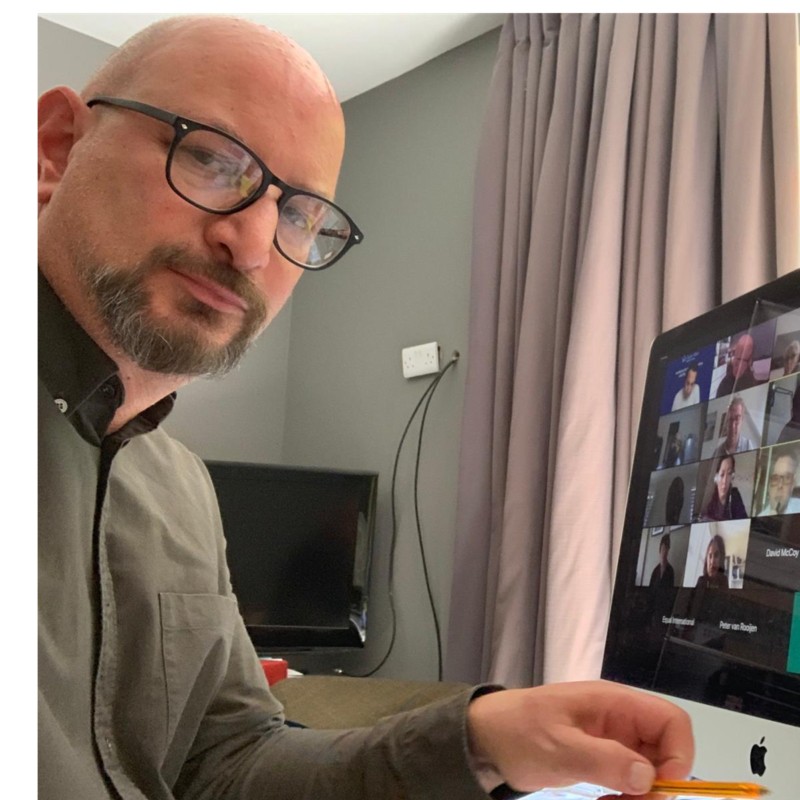

Ras Thato Khesa (pictured here) and Ras Mokgitli Abel Pinkoane are the co-directors of biotech entity Kannelix, a cannabis-hemp innovation enterprise committed to bridging Indigenous Knowledge Systems (IKS) and modern scientific techniques. Kannelix has recently partnered Vaal University of Technology (VUT) and has been collaborating with Marijuana Board of South Africa (MBOSA) to onboard farmers in Gauteng’s Southern Corridor towards sustainable commercialisation. Khesa and Pinkoane spoke to Cannabiz Africa on 30 October 2026.
The bio-tech research duo is emblematic of the emerging cannabis industry’s shared economy: Khesa is a research scientist with MBOSA and also co-founder and facilitator with Mzansi Indigenous Cannabis Stokvel (MICS), of which Pinkoane is head of research.
“Our vision is to connect indigenous agricultural knowledge with scientific infrastructure and our mission is to unlock the scientific, agricultural, medicinal and industrial potential of African botanical resources while ensuring that indigenous communities participate meaningfully in the resulting economic opportunities,” says Khesa.
Adds Pinkoane: “At the heart of Kannelix is a simple principle: African indigenous knowledge must not merely contribute to industrial development; its custodians must also participate in ownership, innovation and economic value creation.”
The research entity’s proposed development approach includes farmer identification and onboarding, based on participants’ production experience, available land, business objectives and training requirements. Other measurements include technical assessment, scientific support, enterprise development and commercialisation readiness.
Ensuring farmer development, product innovation and sustainable industrialisation
Kannelix’s activities encompass cannabis and hemp laboratory analysis, microbiological research, agricultural consultation, farmer education, indigenous botanical product development, and research into sustainable applications such as phytoremediation and bio-based materials.
Khesa and Pinkoane believe the perennial seed shortage that has infamously held back many growers at a time they have been ready to get going should be treated as a top industry priority.
“Seed availability remains a major challenge in developing cannabis and hemp industries. As Kannelix we believe South Africa should prioritise the development of a coordinated indigenous genetic-resource conservation and seed-development programme.” They think such a programmecould connect farmers, universities, research institutions, plant breeders, seed producers and relevant regulatory authorities.
Factors behind seed shortage include limited access to suitable certified seed, dependence on imported cultivars, regulatory requirements, high seed costs, insufficient local multiplication capacity and a mismatch between available genetics and local production conditions, among other seed shortage causes, as per Kannelix’s observation.
Therefore, landrace research efforts should be intensified to discover where landraces can fill the gap. This is more so as there was limited formal documentation and conservation of locally-adapted genetic diversity.
“South African cannabis landraces potentially contain valuable genetic characteristics associated with local environmental adaptation, cannabinoid and terpene expression, and resilience to particular growing conditions. These characteristics warrant systematic scientific investigation and conservation,” says Khesa.
In the Vaal and broader Southern Corridor, indigenous farmers are engaging with fibre, grain and other industrial production systems. However, correct seed selection is essential to fulfilling off-take agreements and Kannelix’s advice to farmers is:
– Select cultivars suited to the intended market, whether fibre, grain, seed oil, cannabinoids or other industrial applications.
– Obtain seed from traceable, reputable and legally compliant sources.
– Verify cultivar identity, germination performance, seed purity and relevant phytosanitary documentation.
– Evaluate suitability for local climatic conditions, soil characteristics and growing seasons.
– Conduct small-scale field trials before committing substantial acreage.
– Confirm that the expected harvest can satisfy contractual quality, quantity and delivery requirements.
– Maintain comprehensive production and traceability records.
Regarding commercialisation, there was a multitude of promising Southern Corridor value chains: hemp construction materials; textiles and fibre products; seed and nutritional products; botanical and laboratory services; agricultural biotechnology; environmental applications and indigenous botanical innovations, to name only some.
“South African cannabis landraces are more than agricultural plants. They form part of a living heritage shaped by generations of cultivation, environmental adaptation and indigenous knowledge. For too long, the scientific and commercial potential of indigenous biological resources has not been matched by equitable recognition and participation for the communities that have preserved them.We now have an opportunity to change that narrative,” says Khesa.
#