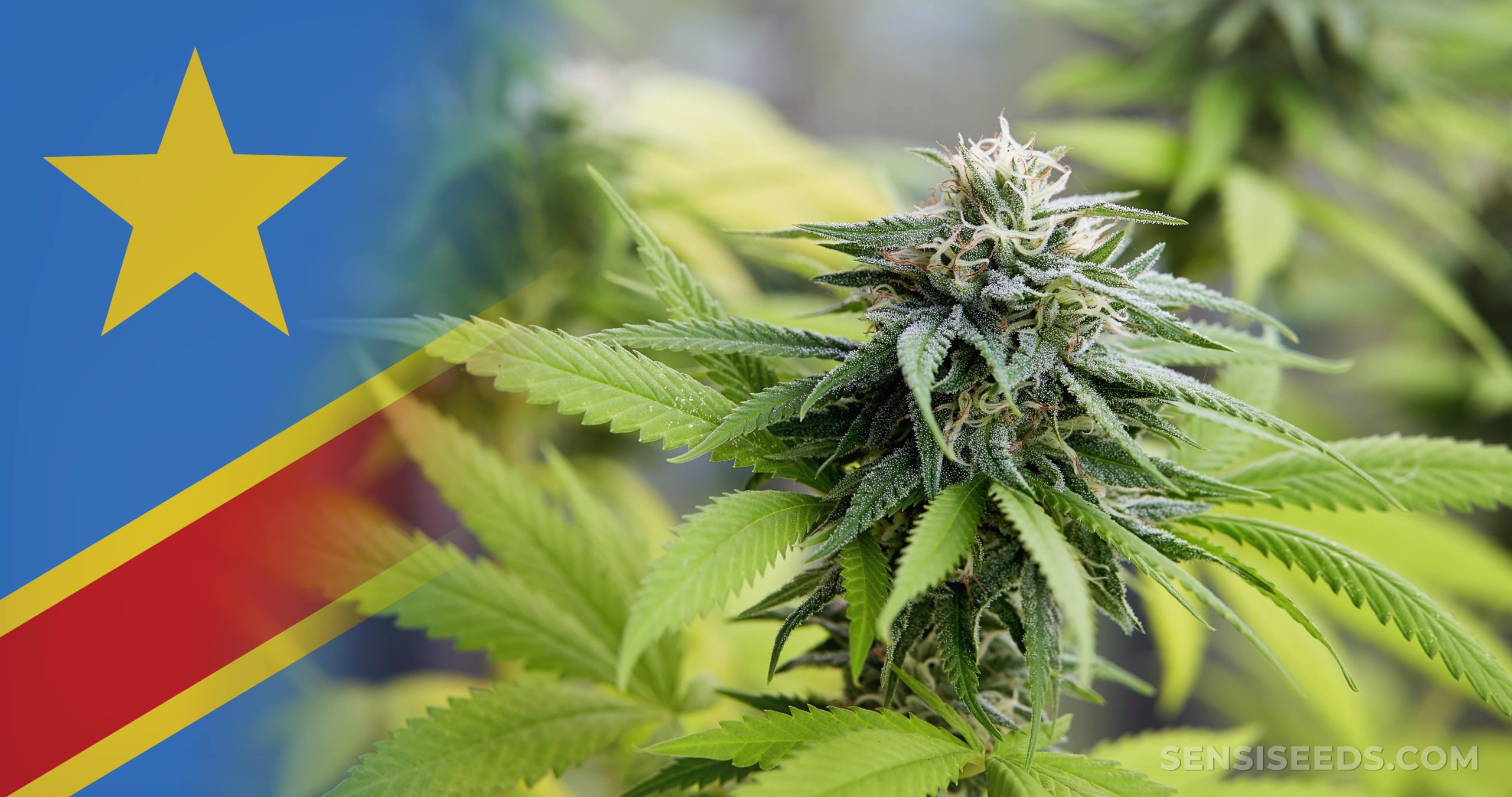
This report from Sustainability News Africa, published on 15 October 2026. Image courtesy Sensiseeds.

The Democratic Republic of Congo (DRC) has moved to examine the implications of cannabis cultivation on agricultural land after concerns were raised that the expansion of the crop could compete with food production.
On 14 October 2026, Dépêche.cd reported from Beni that Prime Minister Judith Suminwa Tuluka had decided to establish an interministerial commission to investigate the issue, following concerns presented by national deputy Crispin Mbindule, elected in Butembo.
The government response places food security, agricultural priorities, environmental considerations, public health and regulatory oversight at the centre of a wider debate over how the country manages competing agricultural uses.
Mbindule had called for the suspension of initiatives and authorisations relating to cannabis and hemp cultivation, expressing concern that land needed for food crops could be redirected towards commercial production. His concerns focus particularly on the implications for food security in a country where increasing agricultural production remains an important development priority.
The intervention has prompted the government to undertake a broader assessment rather than immediately adopting a blanket suspension, creating an opportunity to examine the potential consequences of cannabis cultivation through several policy and regulatory perspectives.
In response, Suminwa instructed the establishment of a commission under the responsibility of the Vice-Prime Minister responsible for the Interior, Security, Decentralisation and Customary Affairs.
The commission will bring together institutions responsible for Agriculture and Food Security, Public Health and Environment, reflecting the cross-sector nature of the issue.
According to the report, its mandate includes verifying information concerning cannabis and hemp cultivation initiatives and authorisations, assessing priority agricultural sectors and reviewing existing control, traceability and regulatory mechanisms.
The commission is also expected to examine measures that could increase the production of strategic food crops in areas facing shortages. At the same time, it will consider the potential development of cash crops while assessing whether such expansion can be reconciled with national agricultural priorities.
This approach recognises that agricultural policy involves more than choosing between food crops and commercial crops. Land availability, farmer livelihoods, market opportunities, environmental pressures, public health and regulatory capacity can all influence whether a new agricultural value chain contributes positively to sustainable development.
The decision is particularly relevant to land-use planning because agricultural land is a finite resource. Where commercial crops expand without effective planning, there can be competition over land and other agricultural resources.
A structured review can therefore help authorities establish whether proposed cannabis cultivation is appropriately located, sufficiently regulated and compatible with food production objectives. The commission’s assessment of traceability and control mechanisms could also help clarify how sensitive agricultural value chains should be monitored from cultivation through processing and distribution.
The government has not, according to the report, announced an immediate nationwide suspension of cannabis cultivation authorisations. Instead, the matter is being subjected to institutional review, with the commission expected to submit its conclusions and recommendations to the Council of Ministers.
This distinction is important because the review could provide the government with evidence on which to determine whether additional controls, changes to existing authorisations or other administrative measures are necessary.
The debate also reflects the broader challenge facing countries seeking to diversify agricultural economies while protecting food availability. Cash crops can provide farmers and economies with new income opportunities when appropriately developed, but their expansion requires careful consideration of land allocation, environmental sustainability and domestic food requirements. For the DRC, where strengthening agricultural production is closely linked to livelihoods and national food security, the government’s review could help shape a more integrated approach to agricultural planning.
The involvement of the Agriculture and Food Security, Public Health and Environment authorities further underlines the need for coordinated policymaking. Rather than treating cannabis cultivation solely as an agricultural or commercial question, the commission’s mandate considers its potential implications across several areas of public policy. Such coordination can support more consistent regulation and improve the ability of institutions to identify environmental, health and food-security risks before decisions on agricultural expansion are made.
From a sustainability perspective, the development of any new agricultural commodity needs to be considered alongside the protection of productive land and the resilience of food systems. The DRC’s decision to investigate the matter creates an opportunity to assess how agricultural diversification can take place without undermining the availability of land for strategic food production. It also highlights the importance of evidence-based regulation, monitoring and traceability in managing emerging agricultural sectors.
The review therefore represents a policy step towards balancing economic opportunities with environmental stewardship and food security. Its eventual recommendations could help determine how cannabis cultivation is regulated, where it may be permitted and what safeguards may be necessary to protect priority food-producing areas.
The outcome will be particularly significant if it strengthens coordination between agricultural development, environmental management and food-security planning.
#