Leading cannabis activists warn that the proposed Combating of Narcotic, Psychoactive Drugs and Substances Bill of 2026 may worsen conditions for already beleaguered cannabis users by classifying cannabis alongside hard drugs. Cannabis continues to be defined as a narcotic in the new draft law that has been put out for public comment with a 60 day deadline.

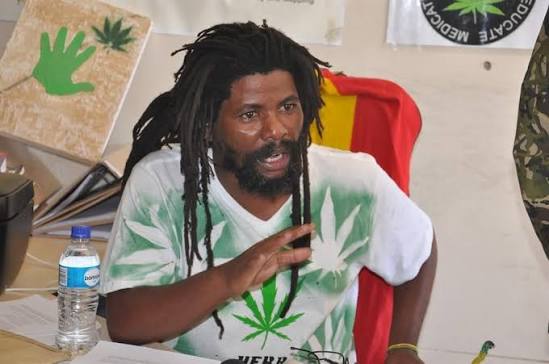
Brian Jaftha (pictured here), who is president of both the Ganja Users of Namibia (GUN) and the Rasta United Front (RUF) of Namibia has been joined by South African Dagga Party leader Jeremy Acton in urging Namibia’s cannabis community to make full use of the consultation period by submitting recommendations demanding an end to prohibition.
The two leading cannabis activists warned the new piece of legislation could potentially aggravate the lives of cannabis users living under some of the toughest anti-cannabis laws in southern Africa.
RUF sent out a notice on 4 November 2026 informing members and users that copies of The Draft Bill could be obtained from the Ministry of Justice. It advised submissions be made to Home Affairs or Regional offices of Nampol (Namibian Police). The Namibian government has not yet made the proposed law available online.
“We welcome the cabinet decision but we will not accept a new Bill that is simply Act 41 of 1971 in a new name. The danger of this bill is that Cannabis will be lumped with hard drugs again. So let your voice be heard,” saidd Jaftha.
The impugned Abuse of Dependence-Producing Substances and Rehabilitation Centres Act 41 of 1971 (RSA) is the activists’ main target. GUN and others have criticised it as a colonial-era relic imposed during South African rule. They say it has no place in modern-day democratic Namibia where it is still being applied rigorously to arrest and incarcerate Rastas and other cannabis users.
Entering the fray, the vetern South Africa activist warned Namibians: “If you miss the deadline you suffer the consequences of drug war fascism.”
RUF noted that Namibia’s Cabinet had approved the draft bill in principle. It said its purported objectives were to:
- Strengthen the fight against drug abuse
- Stop the illegal manufacturing and supply of narcotics
- Regulate supply of toxic chemical inhalants to people
- Prevent the sale and unlawful manufacture of drugs
One user asked on a forum what the bill meant for cannabis users, to which Jaftha quizzically replied “Die hell is los!” (All hell has broken loose).
The draft bill’s circulation caps a dramatic year for GUN, RUF and other pro-cannabis formations and activists in Namibia. On 9 July 2026, Windhoek High Court Judge Claudia Claasen dismissed GUN’s long-running application to have cannabis decriminalised in the country on constitutional grounds.
In the immediate aftermath of that setback Jaftha announced the formation of GUNJA Party and launched a signature-collecting drive to meet the Electoral Commission of Namibia (ECN) 350 000 membership threshold to register a political party. He said the fight to decriminalise cannabis in Namibia had now turned political, with Parliament the new battleground.
Ras Jaftha was released on parole from a Windhoek Correctional facility last winter, two months short of serving his full two-year term for possessing 91 grams of cannabis, following a sting operation in late 2023. He’s become the face of Namibia’s Rastas’ struggle for cannabis decriminalisation.
#