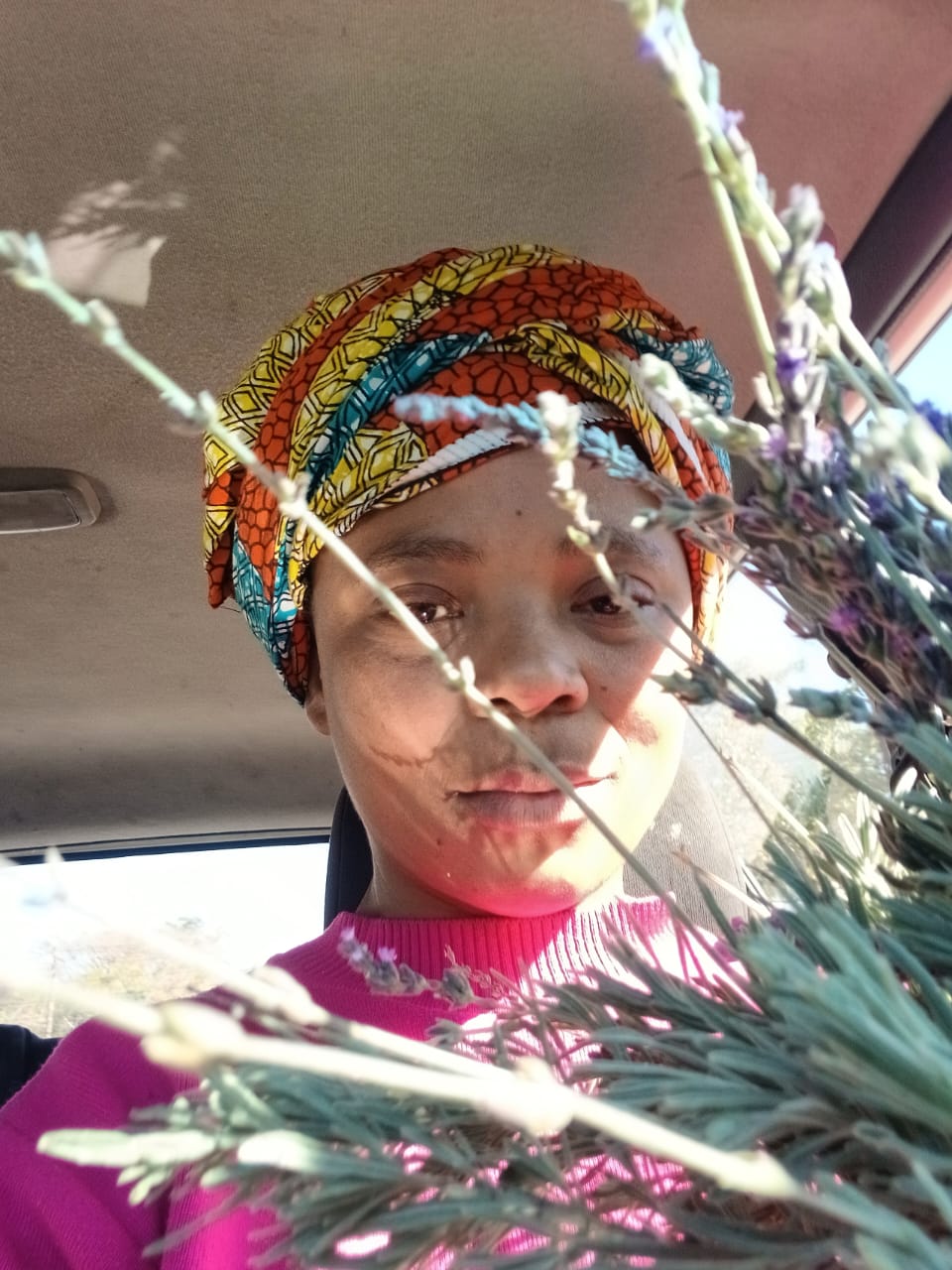
Pictured here: Abalimi Bomya Association founder Philasande Mahlakata.
Abalimi Bomya in Port St. Johns is establishing the first ever community-owned cannabis-processing facility in the country, the Centre for Innovation and Entrepreneurship, says Abalimi Bomya Association founder Philasande Mahlakata.
Construction and implementation of the facility is supported by a consortium led by the Technology Innovation Agency (TIA), an implementation organ of the Department of Science, Technology and Innovation, Mahlakata said.
She added that the facility will be a dream come true for the large landrace-growing Port St Johns community as most indigenous farmers in the area will be able to value-add their produce and get better returns on their crop for the first time. Many Mpondoland farmers currently use mostly rudimentary utensils and equipment to value-add produce.
Abalimi Bomya Association is one of the constituent organizations of Mpondoland Cannabis Belt Association (MCBA), which derives its membership from around nine Eastern Cape municipalities and is centred around O. R. Tambo and Alfred Nzo districts.
It has hundreds of farmer members although exact figures are unknown. Its Instagram page has close to a thousand followers, with others engaging the association on Facebook.
TIA’s Vuyisile Hobololo said his organisation has committed long-term support for the extraction facility. Although the TIA supported all technical aspects of the centre’s establishment, local farmers were in charge of its construction and eventual running, Hobololo said.
“At the end of the day, it is the farmers themselves who must oversee the day to day running of the facility,” Hobololo told Cannabiz Africa recently.
The TIA says it supports IKS-based entrepreneurship and empowering communities to protect ancestral knowledge through the creation of market-ready biotech solutions. It defines Indigenous Knowledge System (IKS) as the collective wisdom, beliefs and practices across agriculture, health, healing and environmental care, passed down through generations. IKS also emphasise harmony with nature, community cohesion and ancestral respect, the TIA says.
It ultimately aspires to bridge ancestral wisdom and biotech innovation through:
1. Supporting innovation in developing traditional remedies, herbal infusions, cosmeceuticals and nutraceuticals
2. Bridging ancestral knowledge with modern technology to enable safe, effective and commercial IK-based solutions
3. Championing ethical innovation that recognises indigenous knowledge holders while contributing to socio-economic growth.
Farmer empowerment was also a highlight of the third SA Indigenous Knowledge and Biotrade Indaba 2026 held in East London in September, 2026.
The Indaba heard that empowering industry stakeholders was the best way to ensure sustainability while government support remained critical to unlocking the cannabis and hemp sector’s commercial and industrial potential.
Mahlakata was delighted the Biotrade Indaba showcased the Port St. Johns extraction facility.
TUT Hemp and Cannabis Research Hub head Professor David Katerere said the Indaba discussed “an ecosystem approach”, a “value chain perspective”of available and required skills and roleplayers so that “we really focus on industrialisation of cannabis and hemp”.
#