
South Africa’s indigenous landrace varieties are in danger of disappearing in the face of hybridization, market marginalization and a lack of regulatory protection. To counter this, the African Cultural Heritage Trust has embarked on an ambitious programme to reintroduce original landrace strains back into the communities they came from.

Supported by the African Farmers Association of SA, and partnered by Druids Garden, the ACHT’s Landrace Conservation and Community Reintroduction Project, is probably the most active force in protecting the country’s landrace heritage.
Cannabis genetics collected from across Africa
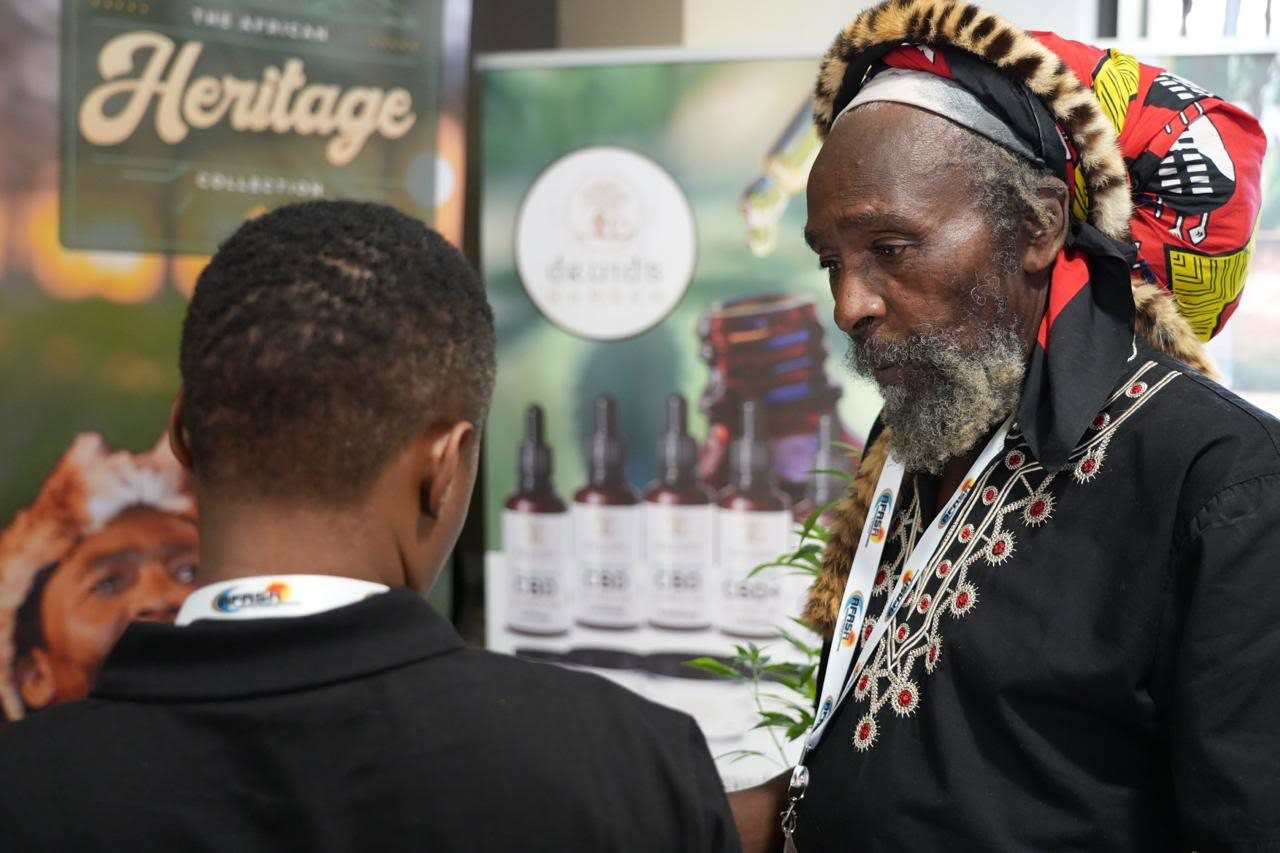
The Project, championed by Qhuzulini Sithole (pictured here), President of the African Cultural Heritage Trust, Dinake “Nongo” Motona, vice-chairman of the AFASA Cannabis Commodity, and Cian McClelLand, CEO of Druids Garden and deputy chair of the South African Cannabis and Hemp Development Association, has been collecting landrace samples from across Africa.
Over the years the project included other landrace varieties from KZN, the Eastern Cape, Malawi and the DRC, with the intent of developing products based on the specific properties of the different landrace varieties.
The Heritage Trust has identified more than 40 different landrace varieties in South Africa, all with unique properties for product development.
The research has identified numerous applications in the health & wellness sector, including human superfoods, animal feed, cosmetics and medicines.
The research was made possible through a Section 22A permit from the Department of Health that was awarded to the Hennops River Valley Association, a body formed in 2018 by The Heritage Trust, Druids Garden, the Amannzi Maningi farm and other farms in the Hennops River Valley. The permits were organized by the Cannabis Development Council of SA (CDCSA).
The landrace project officially began in 2019 as a partnership between Druids Garden and the Heritage Trust doing research on the Hennops River landrace variety that has a multigenerational oral history in the Valley.
In terms of the permit, Druids has to submit regular research findings to the Department of Health. Read the latest report here: An Observational study in the therapeutic uses of medicinal cannabis in South Africa: Phase 3: Commercial and research trials and continued medicinal findings.
McClelland says “Druids continues to cultivate a wide variety of landraces and together with our partners we continue to pioneer research into ancient genetics. These varieties hold enormous potential to develop uniquely SA products, and are our only point of difference in the international market.”
“In 2024, Druids Garden was donated a seed bank of genetics collected in SA Southern Africa between 1948 and 1972 and that is where the current conservation and reintroduction project was birthed” he says.
Project aims to revitalize indigenous landrace genetics
The Project is a national initiative to protect, restore and revitalise South Africa’s authentic landrace cannabis genetics before they are lost to hybridisation with imported commercial varieties. At its heart is a historic seed bank of Southern African landrace varieties collected between 1948 and 1972, donated to Druids Garden in 2024 and believed to be the only uncontaminated collection of its kind still in existence.
The project is characterising these genetics to compile a National Cannabis Germplasm Catalogue, and return verified cultivars to their regions of origin through community nurseries run by local cooperatives and trusts. Indigenous healers and Indigenous Knowledge Systems are central to the work, so ancestral knowledge informs the development of scientifically validated, low-cost phytomedicines and wellness products under the African Heritage Collection brand.
The project matters for rural development because it treats communities as custodians and co-owners of their genetic and cultural heritage, rather than as suppliers of raw material.
Each participating community will sign a Material Transfer Agreement that guarantees shared intellectual property ownership and royalties from downstream product sales, and those royalties are reinvested in local nurseries, education and healthcare.
Through AFASA’s national farmer network and agricultural academies, more than 500 farmers, extension officers and cooperative leaders will receive accredited training aligned with AgriSETA standards. A train-the-trainer model will carry these skills back into home regions.
Over 48 months the project aims to establish functioning community nurseries and cooperatives in at least six South African provinces, develop them into formal enterprises with access to domestic and export markets.
The project brings together biodiversity conservation, skills development, youth and gender inclusion, and community-owned value chains, and it supports five UN Sustainable Development Goals: No Poverty, Zero Hunger, Decent Work and Economic Growth, Responsible Consumption and Production, and Life on Land.
#





