
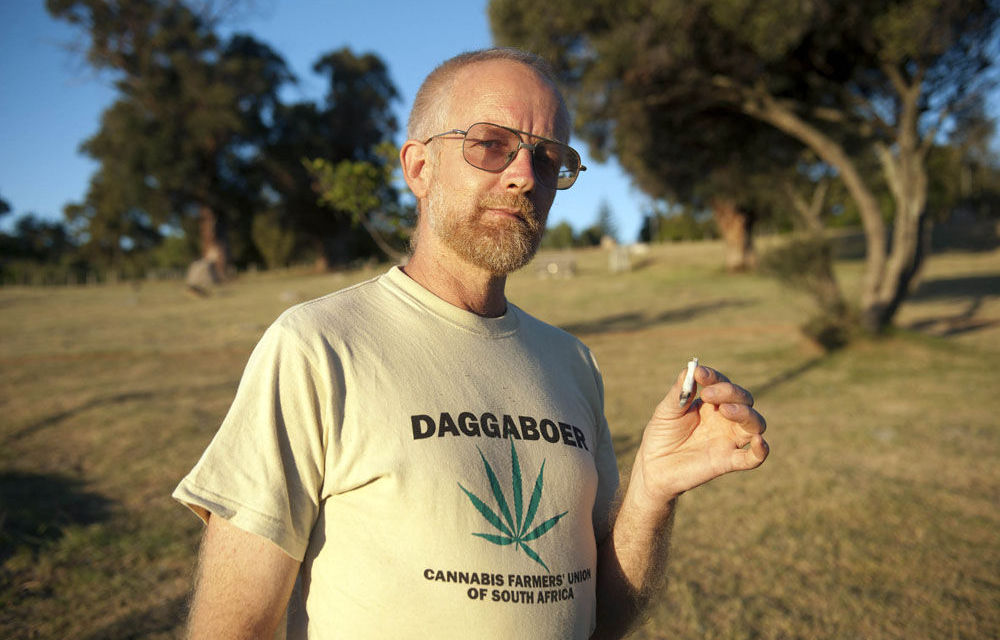
Mass court action is the most likely route for Namibia’s cannabis activists to attain victory in their long-running litigation for decriminalization in the country, South Africa’s activist advocate Jeremy Acton (pictured here) has advised.

“This is what happened in South Africa. It wasn’t just Acton and Prince and the Dagga Couple. At least 20 other citizens filed the same papers as myself as part of their defense against their charges, though their cases rested on the approach to the Concourt by Prince and myself,” stated Acton, writing on a forum for Namibia’s cannabis activists this week.
Acton’s statement comes as the country’s leading cannabis advocacy group Ganja Users of Namibia (GUN) grapples with the fallout from the 9 July 2026 Windhoek High Court verdict which dismissed GUN’s application to force the Namibian government to decriminalise cannabis on constitutional grounds.
In the immediate aftermath of the High Court judgment, GUN President Brian Jaftha announced the formation of the GUNJA Party, saying the decriminalisation fight had turned political. The party would contest elections in a bid to petition for cannabis law reform from within Parliament. However, the Election Commission of Namibia (ECN) requires a minimum 350 000 signatures to register a political party and GUNJA is currently circulating a petition across the country’s 14 regions to sign up regional representatives and members.
“If everyone chose to approach their defense for ganja as a constitutional court challenge…then the Courts would be suddenly inundated with cases challenging the prohibition of ganja,” Acton stated.
“This is entirely possible, even necessary, in Namibia..,” continued Acton, adding: “Lawyers don’t do this. They want everyone to pay, but lawyers are the least qualified to take on the Cannabis legalisation quest. It looks bad on their CVs and professional lawyers were useless in South Africa.”
In her July 2026 judgment dismissing GUN’s challenge, Judge Claudia Claasen cited an ongoing civil consultation exercise by Namibia’s Law Reform and Development Commission (LRDC) to decide if citizens were ready for cannabis decriminalisation and current government steps to overhaul colonial-era anti-drug legislation.
She effectively agreed with government’s special plea that GUN’s case was unripe due to the ongoing government and civil initiatives, ending a year-long trial in a defeat for the cannabis activists.
Namibia is the only country in its southern Africa neighbourhood to yet decriminalise cannabis for medicinal or industrial purposes. Lesotho, South Africa, Botswana, Zambia, Zimbabwe and Malawi have since adopted friendly legislation to allow for medicinal and industrial use. Even so, South Africa remains the only African country to legislate for adult recreational/personal use following the 2018 Prince Judgment, later enshrined as the Cannabis for Private Purposes Act (CfPPA), 2024.
#





