
Almost eight years to the day that ConCourt legalized the private use and possession of cannabis, government is yet again being forced by the courts to come up with a comprehensive cannabis framework.

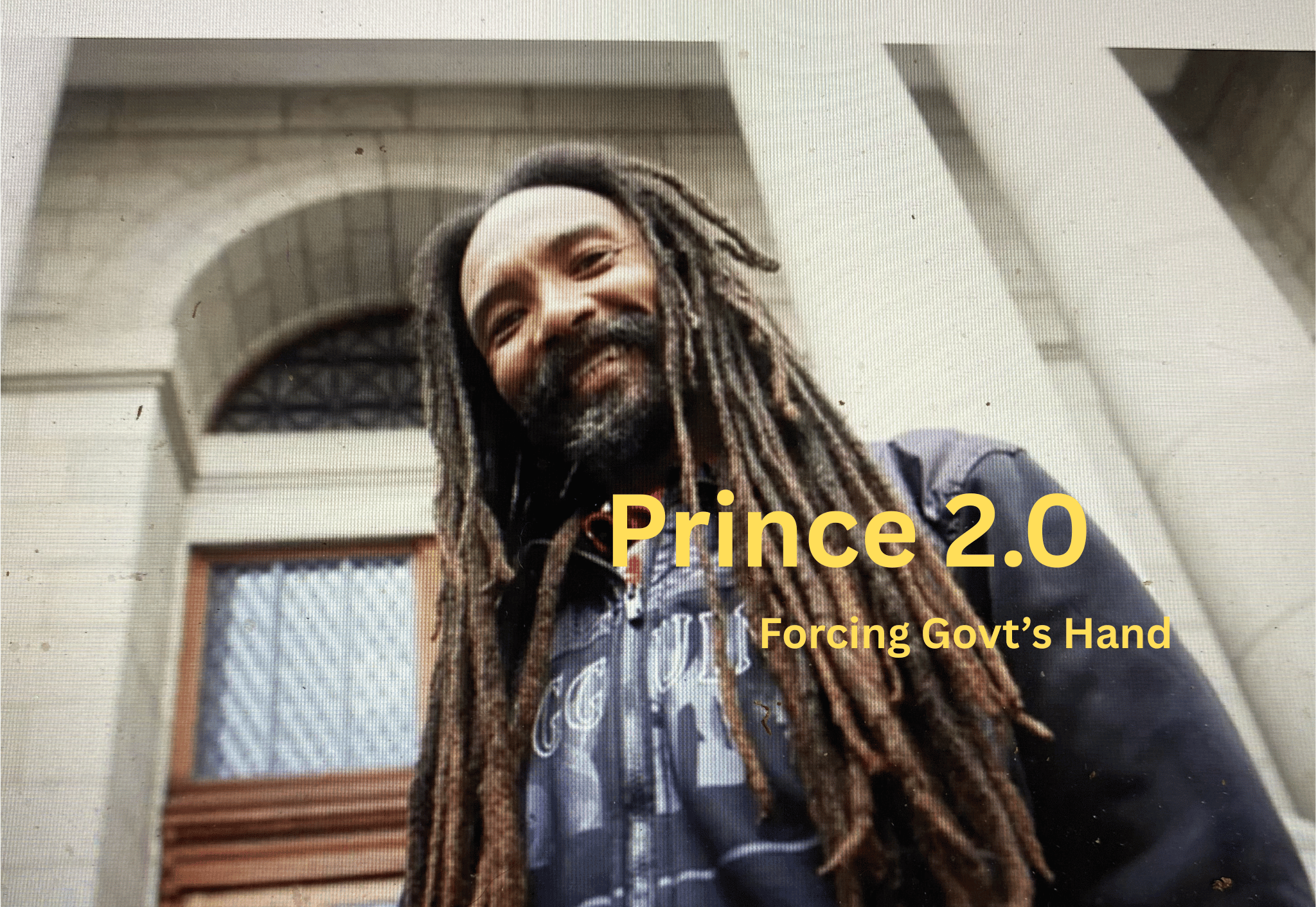
And it is being forced to do so by the man who’s name sits in that historical 18 September 2018 ruling, known in legal libraries as the ‘Prince Judgement’.
Rastafarian elder and SA Cannabis Development Council chair Ras Gareth Prince has yet again used the courts to force government to clarify cannabis policy.
All government departments involved in cannabis reform have been directed to meet at the DTIC’s offices in Pretoria on 15 and 16 September 2026 to align themselves on policy in the face of Prince’s urgent application. The court has given government a two-week deadline, and wants a response by 1 October 2026.
Prince says this is big: “This process has now moved beyond Cape Town and will be addressed at a national government level in Pretoria. The outcome may have far-reaching consequences for indigenous cannabis landraces, regulation, economic development and the communities involved”.
The ‘invite list’ to the state summit is impressive. It includes not only the ‘usual suspects’ – SAPS, the NPA, Justice, SAHPRA and the Departments of Health and Agriculture, Health, but has been extended to SARS, the Department of Science and Innovation, the Mineral Resources and Energy Department, as well as the National Energy Regulator (NERSA).
The invitation to the energy sector in government’s cannabis reform plans is significant. The most obvious hemp development pathway is in the production of biofuels, while SARS’s inclusion, is a sign of serious intent. The meeting is for government representatives only.
News of the meeting was released by Gareth Prince on Whatsapp on 11 September 2026:
“A court-directed interdepartmental meeting concerning the matter of Garreth Prince v Minister and Others will take place at the Department of Trade, Industry and Competition (DTIC) in Pretoria on 14 and 15 September 2026. This is a significant development. Key government departments and regulatory bodies have been invited, including the DTIC, Agriculture, Environmental Affairs, Justice, SAPS, the NPA, Health, Science and Innovation, Mineral Resources and Energy, SARS, SAHPRA and NERSA”.
Prince said the meeting would address five main issues arising from his Western Cape High Court application.
◦ The Applicant’s proposal and the relief being sought
◦ Cannabis landrace commercialisation and bio-industrial opportunities
◦ Licensing, permits and regulatory challenges
◦ The responsibilities of the relevant government departments
◦ The development of a coordinated government position
“We believe the public deserves to be informed about this important process. Further updates will be shared as they become available” said Prince.
The veteran cannabis activist is one of the applicants behind the urgent application to halt cannabis arrests lodged in the Western Cape High Court on 14 April 2026. The application, which also calls for a review of the Cannabis for Private Purposes Act and existing regulations around hemp, has been postponed several times, cited eight government departments as respondents.
At the last hearing in Cape Town, on 31 July 2026, the court directed the parties to find a solution other than through the court process. Prince said at the time, he was confident this could be a ‘win-win’ situation for both the state and the broader cannabis community.
Prince said his application was motivated by the continued persecution of vulnerable cannabis communities by the police and a lack of a cohesive framework for the cannabis sector.
Although the Inter Ministerial Cabinet Task Team on cannabis was formed three years ago under the leadership of the DTIC, it has not advanced policy, legislative or regulatory reform. Now government has been instructed by the courts to do the job that it has been unable to do – develop a co-ordinated government position in the face of the many challenges facing the cannabis sector.
It’s now taken a directive from the courts to kick start government into action. The ‘state summit’ in Pretoria is what the National Cannabis Master Plan Steering Committee should have done when it was formed three years ago.
However, since the DTIC took over as lead partner of the National Cannabis Master Plan, cannabis reform has descended into chaos. The explosion of cannabis retail was not part of the plan, yet this completely illegal sector has become the key driver in cannabis reform, generating anywhere north of R35 billion a year and employing thousands of people.
The DTIC’s cannabis commercialization policy, meant to be the keystone of a new ‘cannabis for all purposes’ act is still stuck in Director General Simphiwe Hamilton’s in-tray. The Department has missed all its own deadlines to present the policy document to Cabinet and open it up for stakeholder submissions. It failed to persuade the Small Business Development Department to introduce cannabis into the new Business Act, and to top it all, its senior cannabis consultant, John Jeffery, resigned unexpectedly at the end of August, no reasons given, leaving the Master Plan without a project manager.
The government leadership vacuum has been exacerbated by the absence of the man who made all the promises in the first place. Having set up the ‘Phakisa framework’ in 2023 which envisaged a ‘whole plant’ approach to the development of a cannabis economy, President Cyril Ramaphosa has not advanced the cause nor pulled his Cabinet into line. Remember Health Minister Aaron Motsaledi’s ill-conceived jaunt into edibles policy last year. He promised as a matter of urgency to produce regulations governing cannabis foodstuff and consumer safety. That was 18 months ago.
The ‘state summit’ follows hot on the heels of the failure to pitch at the MBOSA-convened National Cannabis Dialogue held at the Kempton Park City Hall on 27 August 2026. Despite accepting invitations to attend, neither the Presidency, the Gauteng Premier, the DTIC or the Health Department showed up at the event.
The high level government talks at the DTIC’s Pretoria offices are behind closed doors. News of the summit has not been announced by any of the role-players, nor has any official statement been released.
#





