This report by Africa Editor John Makoni
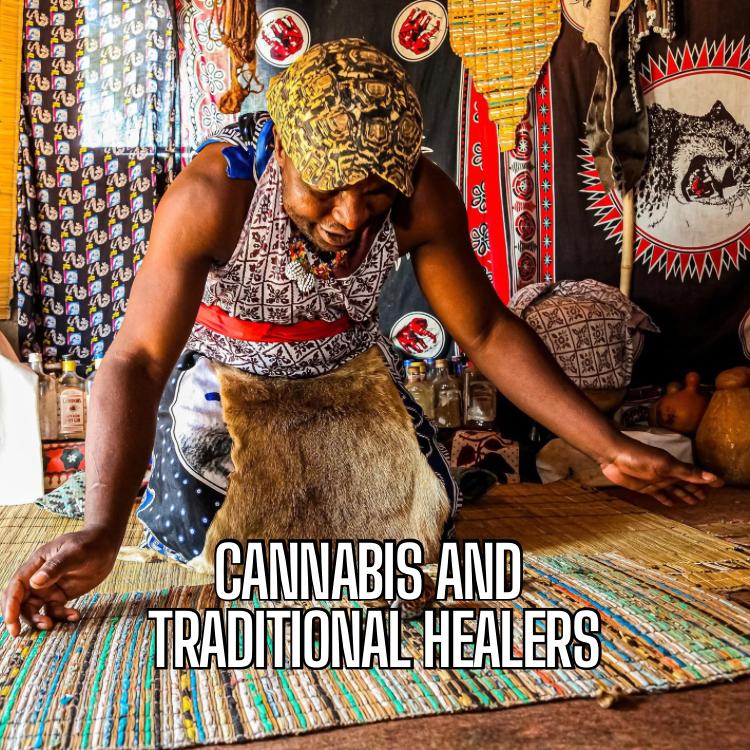
Traditional healers are entitled to greater cannabis rights in terms of a Constitution that respects indigenous practice customs. However, the community’s fragmentation and habitually low literacy levels contribute to impeding cohesive and meaningful stakeholder representation on cannabis and other matters.
This should be concerning as many herbal traditional healers have lain claims to remedies to treat and sometimes cure terminal illnesses such as HIV and cancer.
For example, Eastern Cape cancer survivor and traditional healer Lungiswa Nonkwelo weaned herself off chemotherapy after conventional cancer treatment failed. She resorted to her own cannabis-infused herbal remedy and turned a six-month prognosis into a 26-year and counting lifeline.
Although Nonkwelo admits her patented herbal solution Defender has no scientific clearance, one cancer sufferer has told Cannabiz Africa it has eased her battle with cancer.
TUT runs a traditional healers’ short learning course that bridges the western-herbal medicine divide. It trains herbal traditional healers on the sustainable and ethical harvesting, handling and processing of plant medicines; patient care and record keeping.
The programme has recommended for further development a healer’s claim to an HIV treatment.
Professor David Katerere, TUT/CSIR Cannabis and Hemp co-director and TUT Platform Chair in Pharmaceutical and Biotech Advancement in Africa (PBAA) says cannabis use in routine traditional healing tends to be rare but highlights the link between agro-processing and pharmaceutical development.
“We need to know how long the herbal medicine has been used for and what its effects have been,” he says.
The potential patentee is one of three traditional medicine doctors on TUT’s training programmeand their prototype is now being funded by the SA Medical Research Council (SAMRC) and Technology Innovation Agency (TIA). The other trainees are from Eastern Cape and Venda; the traditional healers are government agencies referrals, said Katerere.
Of significance is that current regulations prohibit traditional healers from dispensing cannabis although the healers can legally issue sick notes. The South African Health Products Regulatory Authority (SAHPRA) has explicitly warned as illegal the use of the Traditional Healers Act to trade in cannabis. It has emphasised that cannabis prescription is permitted only for medical patients registered under Section 21 of the Medicines Act.
However, stakeholders including the Marijuana Board of South Africa (Mbosa) believe cannabis prescription by traditional healers should be a done deal. If a traditional healer can issue a sick leave note, why is he/she prohibited from dispensing cannabis just like his/her western medicine doctor or the suburban cannabis cafe operating under the grey zone, pending the promulgation of binding cannabis regulations?
The case of Free State High Court Judge Lepono Lekale has thrown this conundrum into sharp relief. Lekale has been on eight years’ sick leave absence due to deteriorating eye-sight.
Whilst his tribunal has motivated for Lekale’s termination based on medical doctors’ worseningprognoses, Lekale has countered his traditional healers will be able to restore his eyesight and asked for more time.
Intervening on Lekale’s behalf, Judges Matters’ Mbekezeli Benjamin has argued traditional healing claims should be respected and urged the tribunal to resolve the western/traditional healing medicine tension and the effect on the judiciary.
The issue also highlights the disunity in local herbal traditional healing as authoritative bodies such as the Traditional Healers Organization (THO) are challenged by multiple and competing associations.
Conversely, in Mozambique and Zimbabwe traditional healers are united under prominent national bodies, AMETRAMO (Associaҫão dos Médicos Tradicionais or Association of Traditional Healers of Mozambique) and the Zimbabwe National Traditional Healers Association (ZINATHA), respectively.
Also, low literacy levels, although a recurrent phenomenon in Africa, is exacerbated by the apartheid legacy, weakening further traditional healers’ bargaining powers.
This spells doom for health outcomes as Katerere has claimed traditional medicine is at the centre of healthcare in the SADC region. “Traditional medicine is an important part of the health delivery system not just in South Africa but across the world. We believe that when traditional healers are trained they serve an important role.”
Traditional African medicinal systems’ integration into western medicinal practices could do wonders to rehabilitate traditional healing herbal practices, for the benefit of sustainable medicinal and industrial cannabis economies.
For instance, in Namibia, cannabis activist collective Ganja Users of Namibia (GUN) makesfood rights part of its decriminalisation campaign points. GUN has criticised a continuing hemp ban for placing marginalised indigenous communities in a malnutrition trap, citing IKS methodologies available to extract hemp nutrition.
Hemp seed is a complete protein, containing all nine essential amino acids, making itindispensable for the immune system, a healthy metabolism and good brain function. Artisinal hemp industries to produce fibre, textiles and oils could also help create employment and sustainable livelihoods.
As governments seek to mainstream cannabis into various economies, traditional knowledge, ofwhich African herbalists are important custodians, deserves a greater role in communities’ and policymakers’ plans for cannabis and hemp development.
Bodies like the South African Traditional and Holistic Wellness Association (SATAHWA) are a good start. Operating at the interface of traditional healing and western medicine, SATAHWA prioritises holistic care.
That sounds a promising foothold to a future integrated medicinal order!
#