This report from the Business of Cannabis.

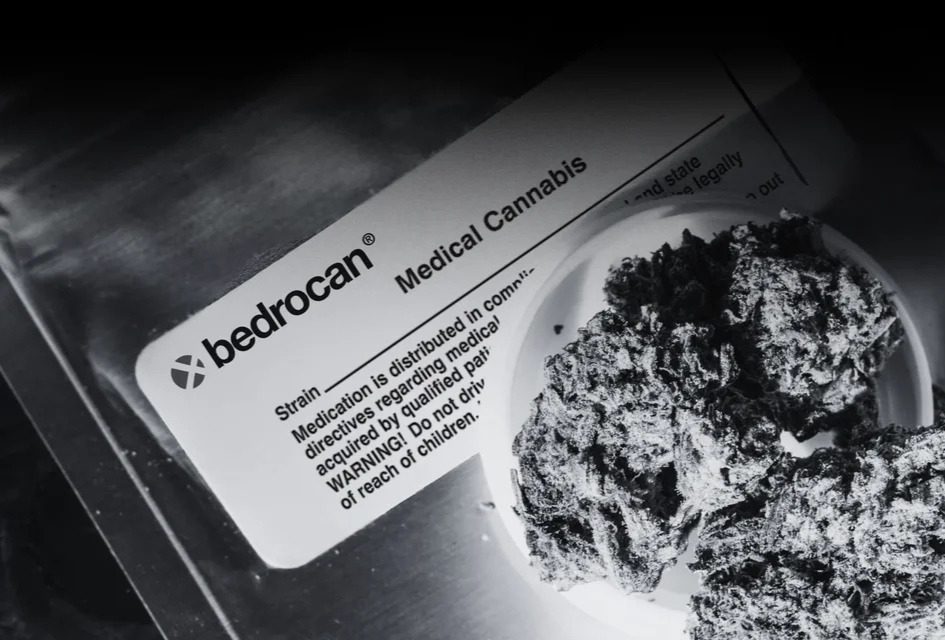
Less than two weeks after being granted court-supervised suspension of payments, Bedrocan Nederland B.V. and Bedrocan International B.V., the two Dutch entities of Europe’s longest-standing medicinal cannabis producer, were declared bankrupt by Rechtbank Noord-Nederland on October 7, 2026.
Its Danish entity, Bedrocan Danmark ApS, which the company had initially told Business of Cannabis was unaffected by the Dutch proceedings, had itself separately entered formal restructuring proceedings at the Bankruptcy Court in Roskilde six days earlier, on October 1, 2026.
With both arms of the group now in formal insolvency proceedings, patient advocacy groups are calling for urgent emergency measures to ensure the continued supply of medicines such as Bedrolite to the vulnerable patients who depend on them.
Matt Hughes of the Medcan Family Foundation, which supports families of UK children prescribed cannabis-based medicinal products, told Business of Cannabis that the bankruptcy had created ‘an immediate risk to life for children and young people who rely on Bedrolite to control devastating, drug-resistant seizures’.
“These are children for whom every other medication has failed. Children who, without this treatment, would now be in palliative care or no longer with us at all. If access is withdrawn, that is the future they and their families face,” Hughes said.
Has Bedrocan collapsed?
Bedrocan’s Dutch bankruptcy protection measures have now failed, and its Danish arm is in court-supervised restructuring, with the state as its single largest customer unwilling, or unable, to keep it alive.
On October 01, the group’s Danish production arm, which produces several of the group’s medicinal varieties at roughly a quarter of the capacity of its Dutch facility, was put into formal ‘rekonstruktion’. Attorney Per Astrup Madsen of DLA Piper was appointed rekonstruktør, with a draft restructuring plan due to creditors on October 15 and a creditors’ meeting scheduled for October 22.
According to court documents seen by BofC, the filing identifies two secured creditors behind floating charges on the Danish business, including Sydbank, with an exposure of DKK 13.5m, and EIFO, the Danish state’s export and investment fund, with DKK 28m at risk.
The administrator’s note to creditors suggests that its preferred route out of restructuring is via an ‘elevator model’. This is a capital reduction followed by a capital increase subscribed by a new owner, in effect wiping out the existing equity and bringing in fresh money.
The Danish entity was already in a precarious financial position, its annual report shows. Figures for the year to April 2026, signed off by KPMG P/S in July, show a qualified opinion citing an unresolvable DKK 39m intercompany receivable owed by the Dutch parent.
Its accounts show cash on hand of just DKK 4,052, profit for the year of DKK 777,000, a 92% fall from the DKK 10.2m posted in 2024, headcount up from 10 to 23 full-time employees, and operating lease commitments of roughly DKK 80m over the remaining term.
Catch up on the Bedrocan story so far…
Medical Cannabis Pioneer Bedrocan Fights to Avoid Bankruptcy in Home Market
Dutch Cannabis Patients Facing 10-Month Supply Gap, Many With ‘No Therapeutic Alternative’
Crucially, the Danish entity is run on a cost-plus intercompany arrangement that leaves it dependent on the Dutch group for both demand and cash.
With the Dutch state’s contract wound down and the Ministry of Health (VWS) unwilling to agree new commercial terms, both entities were pulled under. Bedrocan’s two Dutch entities fell into full faillissement on 7 October, with Arnold Gras and F.C. Verduijn appointed curators, and a first public report expected by early January 2027.
In correspondence with BofC on the day after the Dutch bankruptcy was declared, head of corporate and marketing Femke Starrenburg said attempts attempts by the company and its court-appointed administrators to agree terms with VWS had failed over the ministry’s refusal to commit to taking delivery of medicinal cannabis batches already produced.
“During the suspension of payments procedure, the administrators worked extensively to find a solution that would allow the Dutch operations to continue,” she said. “Unfortunately, no agreement could be reached with the Dutch Ministry of Health regarding the payment and transfer of the remaining medicinal cannabis batches. Without such an agreement, the financing required could not be secured, making bankruptcy unavoidable.”
That reading has been echoed from within the Danish industry. Thomas Skovlund Schnegelsberg, chief executive of fellow medical cannabis producer Stenocare, told BofC that the collapse appeared to him to have been avoidable.
“I find it difficult to understand how such a large and pioneering company in the industry has ended up in a situation where it is effectively up against the wall,” he said. “Their ability to manoeuvre is, however, heavily constrained by the Dutch regulatory framework. My understanding is that they have both the willingness and the capability to take over more of the work currently handled by the BMC, but the necessary rules and guidance have not yet been put in place by the BMC and the Dutch authorities.’
“It is a very unfortunate situation and, in my view, one that could potentially have been avoided if the Dutch authorities had either had the necessary rules in place earlier or had been willing to extend the current export arrangement into 2027, as has happened previously.”
Starrenburg also confirmed, for the first time, that the Danish subsidiary had entered restructuring the week before, stating that ‘this is not something we have communicated about previously’. She described the rekonstruktion as ‘broadly comparable to a suspension of payments procedure in the Netherlands’ and designed to give the business ‘breathing space while solutions are explored’. She added that production in Denmark would ‘continue as normal’.