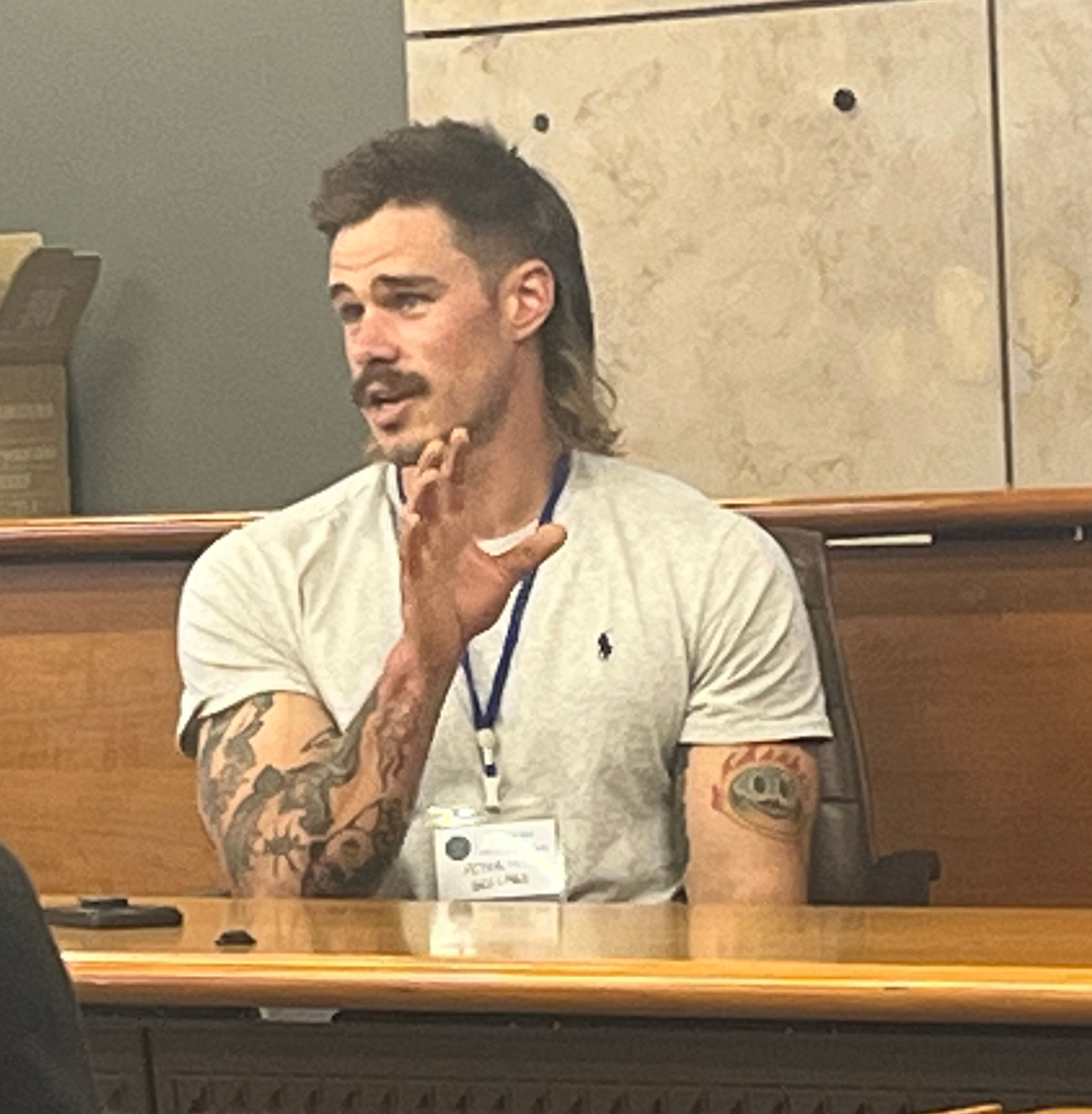
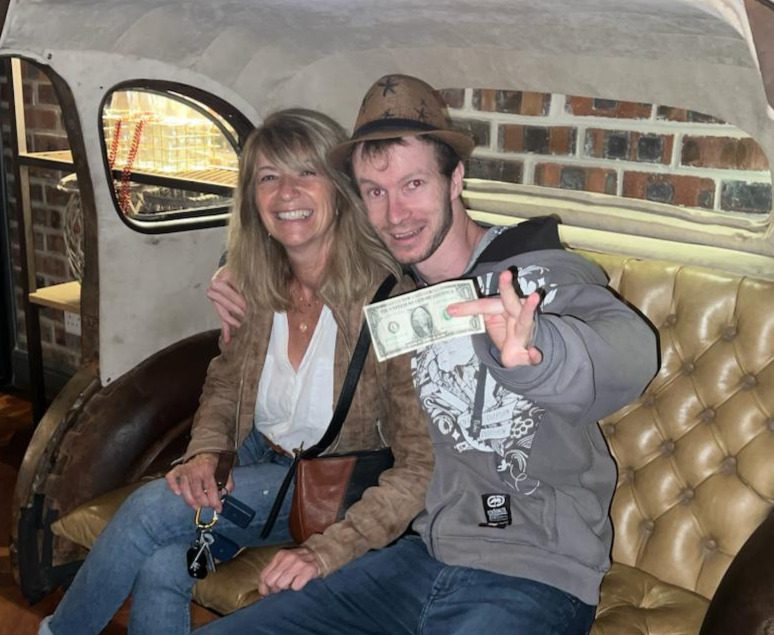
(Image above Ursula Kendall and her son Mathew)
“Who do they think they are?” asks Ursula, from Kommetjie in the Western Cape. She is angry at how the South African Health Products Regulatory Authority (SAHPRA) has treated her family.
Her son Mathew, 28, has refractory epilepsy. After over a decade of drug resistant epilepsy Matthew had been responding remarkably well to AKOS BIO’s C100 NOIA which is high quality medicine grade CBD oil manufactured in South Africa which can be legally prescribed by doctors when other treatments have failed.
Cannabis medication worked where all other treatments failed
Within a few days of stating the C100 NOIA medicines Matthews seizures significantly reduced for the first time in over a decade. That treatment is now at risk after SAHPRA reportedly stopped approving applications under Section 21 of the Medicines Act. This is currently the only legal pathway for patients to be prescribed medical cannabis oils.
“Mathew was a normal, intelligent boy until the age of twelve and a half. And then he suddenly started having these seizures,” says Ursula. He was having multiple seizures every day. For 16 years the family has lived with constant stress as she searched for a solution.
“I have tried every therapy, you name it. I’ve gone through 32 different forms of medication and advice, but nothing really worked.”
Earlier this year she was introduced to AKOs BIO’s C100 NOIA cannabis oil tincture, a medicinal cannabinoid with proven efficacy in reducing drug resistant epilepsy.
“This made a huge, huge difference. He was almost returning to how he was before the seizures. He was able to converse and interact normally. Everybody commented on what a remarkable comeback he had made.”
SAHPRA’s inexplicable about-turn
Mathew’s first Section 21 application, submitted by his treating specialist Dr James Butler was approved in February 2026. When Matthews neurologist applied to continue treatment in early September, SAHPRA rejected the application. Now unable to be prescribed the medicines Matthew faces the daunting prospect of his seizures returning.
“SAHPRA told me the code was wrong in the reapplication, which is why they rejected it,” says Ursula. “So we corrected it and resubmitted. And they still rejected it.”
The second rejection came with no explanation. Each application is not a simple form. It is a full clinical submission prepared by Mathew’s specialist and his practice, supported by AKOS BIO’s team, and it had already been accepted once. SAPRHA are supposed to simply re-authorise a section 21 when a medicines is having a clinical benefit which is clearly the case.
She now has less than a month of supply left. “Should I be weaning him off it and preparing for the multiple seizures that will follow, or should I hope someone will come to their senses and allow the medication to continue?”
“It drives me crazy when I look around and see how freely available illegal cannabis is for social use. But here I am, trying to go the legal, ethical path to get medical cannabis tinctures for my boy, whose quality of life has been made so much better. And it’s being disallowed. How is this right?”
AKOS BIO taking up the Kendall case with SAHPRA
AKOS BIO CEO Anton Ofield-Kerr says he has taken up Ursula’s case with SAHPRA, along with those of several children with epilepsy whose prescribed treatment has been halted.
One is a three-year-old who was having more than 150 seizures a day before treatment. Ofield-Kerr says it took a lawyer’s letter threatening court action before SAHPRA approved the child’s reapplication on 7 October 2026, after two earlier rejections. “It is the only Section 21 approval I know of since mid-July,” he says.
He says few people see how much work sits behind a single Section 21 application. AKOS BIO’s medicines are manufactured in a SAHPRA-licensed, GMP-certified facility, with every batch tested and certified. Specialists prescribe within clinical guidelines, and the medicine is dispensed through a licensed pharmacy under a Responsible Pharmacist.
For each patient, the treating doctor must compile and submit a detailed dossier to SAHPRA. This includes the patient’s diagnosis and history, the treatments already tried, the clinical motivation, the dosing plan, and the product’s quality and GMP documentation. Reapplications also require evidence of how the patient has responded.
“Every application represents hours of work by the specialist, their practice staff and our team, on top of years of investment in GMP manufacturing, quality systems and compliance,” says Ofield-Kerr.
“AKOS BIO was set up to show the most regulatory-compliant route for cannabis medicines to reach South African patients. We have done everything the system asks of us. Yet applications for children and adults with serious conditions, who are doing well on a high-quality certified medicine, are being rejected on a technicality and then rejected again with no reason given. That leaves families facing seizure relapse or turning to unregulated products. That is not safe, and it is not what the system is meant to deliver.”
AKOS BIO’s Responsible Pharmacist, Courtney Yip, says her concern is for patients. “Behind every application is a person with a serious condition and a parent counting how many days of supply are left. Stopping an effective treatment abruptly can put patients at real risk. I’m asking SAHPRA to engage urgently so continuity of care is protected.”
Ofield-Kerr says C100 is one of two neurologically focused cannabinoid medicines AKOS BIO is ready to submit to SAHPRA for registration, the other being B25 NOIA which is a balanced formula of CBD and THT which is effective in treating muscle spasticity and chronic pain. Registration can take up to 18 months. Until then, Section 21 is the only way patients can access them.
SAHPRA has not been available for comment on this story.
#