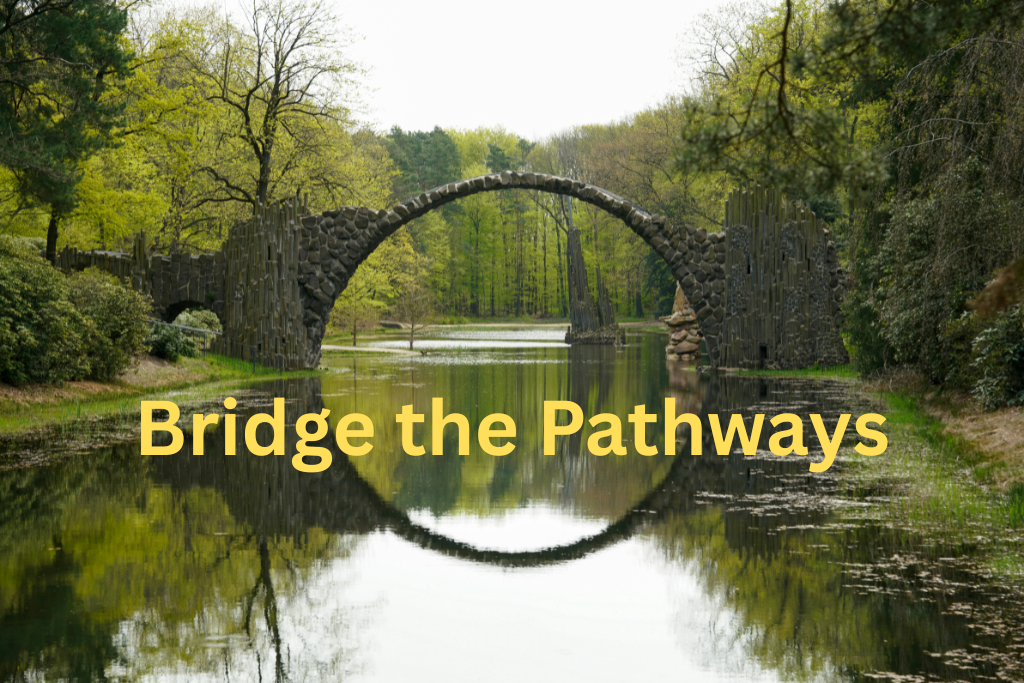
Photo Zosia Szopka , courtesy Unsplash
South Africa’s cannabis problem is often described as one of regulatory delay, but delay explains only part of what is happening.
A more structural problem has emerged as government develops separate responses for medicinal cannabis, industrial hemp, private adult use, indigenous growers, manufacturing and commercialisation. Each pathway may be defensible within the mandate of the department responsible for it, yet the country still lacks a sufficiently coherent mechanism for connecting those pathways into a functioning market.
That matters because an industry cannot be built simply by regulating its individual components.
Time to Build Bridges Between the Legal Pathways
Cultivation has to connect with processing, processing with products, products with lawful distribution, and production standards with buyers who are both commercially willing and legally entitled to purchase what is being produced. Where those connections are absent, South Africa risks creating several administratively respectable cannabis systems that operate alongside one another without developing into a commercially coherent economy.
The medicinal pathway illustrates the difficulty. SAHPRA regulates cannabis cultivation for medicinal and research purposes under the medicine’s framework, with its published guideline imposing requirements concerning quality, security, standard operating procedures and measures intended to prevent diversion. Those requirements exist for sound reasons because pharmaceutical supply demands a considerably different level of control from ordinary agricultural production.
The commercial problem arises when operators build infrastructure capable of meeting those requirements but the market surrounding that infrastructure does not develop at the same rate. Compliant medicinal-cannabis facilities can require substantial capital investment in premises, security, personnel, quality systems and regulatory administration, and those costs only become commercially rational where operators eventually have viable markets in which their authorised activities can generate sustainable revenue.
A medicinal cannabis authorisation should consequently not be confused with a general entitlement to participate in whatever cannabis market may subsequently develop. The activity authorised, the product concerned and its intended use remain important, and an operator cannot simply redirect regulated production into an unrelated commercial channel because demand exists elsewhere.
Traditional and small-scale growers encounter the problem from almost the opposite direction. Land, cultivation experience, local genetics, community relationships and practical knowledge developed over many years can all have economic value, but none automatically provides entry into a regulated value chain.
Recognition, training or participation in a development programme may be useful, yet those interventions do not resolve the commercial question unless there is also a lawful buyer, an appropriate product standard, access to testing or processing where required and a route through which the crop can move into a permitted market.
The Department of Small Business Development has now confronted this issue directly. Its September 2026 request for quotations sought expertise to develop a framework dealing with the recognition, protection and regulated participation of indigenous cannabis growers in South Africa’s formal cannabis and hemp value chain. The significance lies not simply in recognising indigenous growers, but in acknowledging that the legal mechanism through which meaningful formal participation takes place still requires deliberate design.
The question that follows is where those growers participate commercially once they have been recognised.
At the Heart of the Matter is the Commercial Question
A farmer may be registered, trained and capable of producing a crop while still having no commercially viable customer. This is where references to “offtake” require closer attention. On 2 October, the dtic said that major manufacturers and processors were committing to off-take opportunities and that these commitments could help create sustainable pathways for indigenous growers into domestic and international markets.
The statement is encouraging, but it does not identify the counterparties, contracted quantities, prices or duration of those arrangements, so the commercial significance of the commitments will ultimately depend on what develops in practice.
For an offtake arrangement to translate into sustainable participation, the material being produced must be lawful for its intended purpose, the purchaser must be legally able to receive and use it, the applicable standards must be achievable, and the economics must work for both producer and processor. Downstream demand also matters because an agreement to acquire biomass does not create a sustainable value chain if the resulting product has no viable market.
Processing raises the same problem. A processor needs clarity about which material may lawfully be received, under what authority, for which use and according to which standards. Processing capacity on its own does not create market access for growers if the legal route between cultivation, processing and the ultimate product remains incomplete.
Hemp demonstrates why the distinctions between these pathways need to be kept current. South Africa’s new Plant Improvement Act 11 of 2018 and its regulations commenced on 1 December 2025, replacing the previous plant-improvement regime. The regulations now expressly provide for Cannabis sativa L. hemp permits for specified activities, including production of grain or material for industrial purposes, with permits issued through the agricultural regulatory framework.
This creates a genuine regulated agricultural pathway, but success in hemp cannot automatically resolve the commercial position of growers producing cannabis for other purposes. Hemp can support fibre, construction materials, seed and other industrial applications, while growers whose experience and genetics relate to different cannabis markets may require entirely different routes into formal commerce.
Medicinal cannabis presents the same difficulty in reverse. It can create pharmaceutical expertise, regulated cultivation capacity, research capability and access to particular medicinal markets without automatically providing a route for traditional growers into a broader domestic cannabis economy. Any future adult-use commercial framework would introduce another regulatory and economic category again. The same plant may sit at the centre of all of these activities, but their legal purposes and market requirements are not interchangeable.
No Regulatory Connection Between Institutions Involved in Cannabis Reform
Government’s own division of responsibilities reflects the distinction. Justice has expressly stated that the private-use framework does not deal with commercial cultivation, buying or selling cannabis or cannabis products, or the recognition of traditional growers, and that those issues are being addressed elsewhere in government, including through departments responsible for trade and industry, agriculture and health.
There are legitimate reasons for different institutions to carry different statutory responsibilities. The difficulty emerges at the points where one institution’s mandate ends and another begins, because participants in the sector do not experience cannabis as a collection of departmental mandates. A grower, processor, manufacturer, pharmacist or investor experiences a value chain, and economic activity becomes difficult when the regulatory endpoint of one part of that chain does not connect cleanly to the beginning of the next.
The next stage of policy development therefore needs to pay considerably more attention to those interfaces. The practical questions are straightforward even when the legal answers are not: what material may move from one pathway into another, who may receive it, which standards apply at the point of transfer, what documentation is required and what lawful market exists for the resulting product?
For an indigenous or small-scale grower, that framework should provide a realistic understanding of what may be cultivated, who may buy it, what standards and testing are required and what happens after harvest. A processor needs to know what categories of material may lawfully enter its facility and what may be produced from them.
Medicinal operators need sufficient certainty about the limits of the pharmaceutical pathway while policymakers consider how existing compliant capability might interact with other lawful activities without collapsing fundamentally different regulatory systems into one.
Standards should follow the risk and intended use of the product. Pharmaceutical controls may be entirely appropriate where cannabis is destined for medicinal use, but applying the same infrastructure requirements to agricultural material destined for a lower-risk industrial application can make participation unnecessarily expensive.
The converse is equally important because material entering a medicinal supply chain cannot avoid applicable pharmaceutical requirements merely because its producer is small-scale, traditional or participating in a development programme.
Inclusion therefore does not mean abandoning standards. It requires matching standards to the activity being regulated and ensuring that participants have a realistic route to satisfy the requirements relevant to the market they are trying to enter.
This distinction becomes increasingly important as government shifts its language from cultivation towards commercialisation. The DTIC’S October engagement specifically focused on local demand, manufacturing, market access, exports and movement across the value chain from cultivation into processing and production.
That is a more useful way of framing the sector because cultivation alone does not amount to commercialisation.
The measure of progress should consequently move beyond the number of people trained, permits granted or programmes launched. Programmes intended to support indigenous growers should eventually be assessed against whether participants reached functioning markets and remained economically active, while the health of the regulated medicinal sector cannot be established simply by counting compliant operators if expensive capacity has no sufficiently viable commercial application.
Emerging Cannabis Economy Needs Regulations That Link Pathways
South Africa already has many of the components associated with an emerging cannabis economy: cultivation knowledge, medicinal-cannabis infrastructure, an operational hemp pathway, processors, investors, researchers and traditional growers. The unresolved question is whether those components can interact lawfully and commercially rather than remaining contained within separate regulatory compartments.
Government does not need to force medicinal cannabis, hemp, industrial products and any future adult-use market into a single regulatory regime. Their purposes and risks are too different for that. What is required is a clearer account of how those systems relate to one another, where they are intentionally separate and where lawful movement of material, services and economic opportunity should be possible.
Without that work, progress can continue to be reported within individual programmes while participants themselves remain unable to complete the journey from cultivation to sustainable commerce.
A functioning cannabis economy will not emerge because every department successfully administers its own part of the plant. It will emerge when the legitimate parts of the value chain are able to connect.
Until then, South Africa is not dealing with one cannabis industry developing at different speeds so much as several cannabis economies operating in the same country, with too few lawful bridges between them.
Charl Botha, B.Proc (S.A.), is co-founder of H3 Legal Solutions and a regulatory strategist who has briefed Parliament on cannabis policy and industrialisation.
#