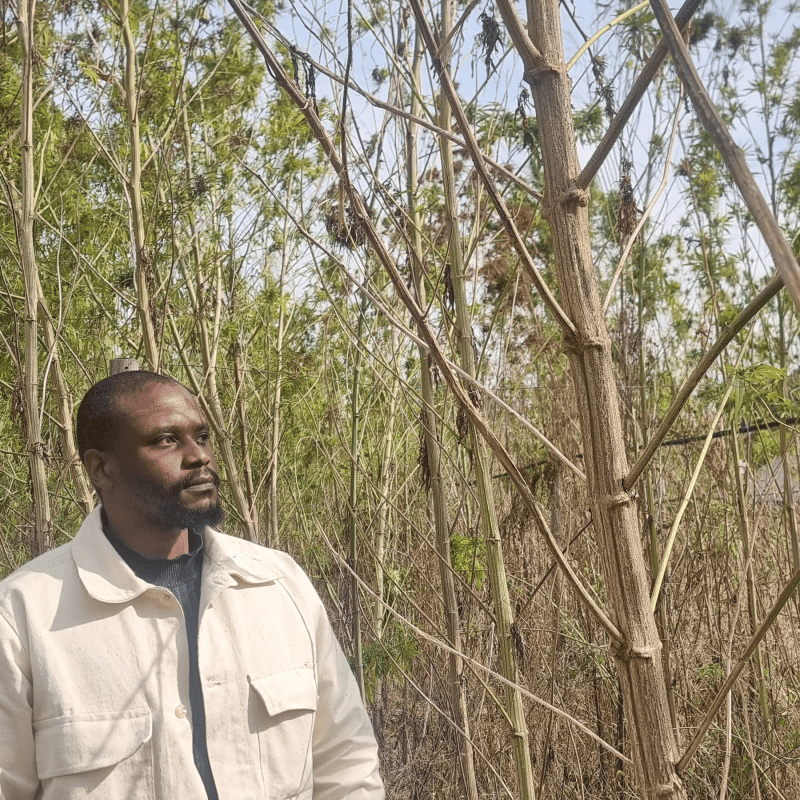
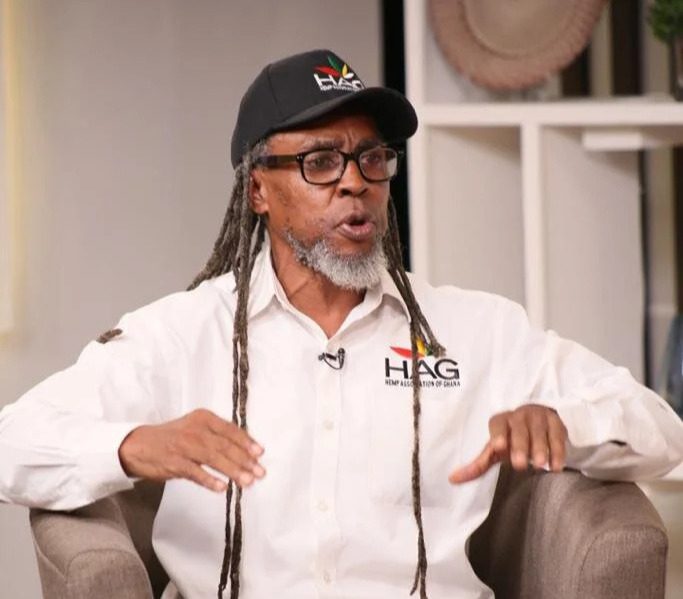
This is a letter from HAG’s CEO Nana Kwaku Agyemang (pictured here) to the President of Ghana, sent on 19 October 2026.

RE: New Economy Policy ($10 Billion USD)
His Excellency
President of the Republic of Ghana
J o h n D r a m a n i M a h a m a
Flagstaff House
A c c r a
RE: New Economy Policy ($10 Billion USD)
Your Excellency,
I write to request a targeted intervention under your proposed US$10 billion New Economy programme: payment of the applicable licence fees for and on behalf of Hempire Agric Ghana Limited (HAG).
The intervention sought would amount to no more than US$20 million, covering cultivation and associated licence fees.Our request covers a minimum cultivation area of 90 hectares and a maximum of 404 hectares. Our preferred scale is 404 hectares, approximately 998 acres, as this provides the land base for 2,000 participating farmers, alongside additional employment in security, administration, on-site supervision, processing and manufacturing.
HAG has already secured off-taker agreements and has farmers ready to participate. We have addressed training, seed, testing, processing and market arrangements within our proposed project. Securing the licence is the outstanding requirement for unlocking investment. Once we have that authorisation/licenses we will have investors to finance implementation.
The intervention we seek would enable us to move those preparations into operation.
Your Excellency, on 19th June 1994, former British Prime Minister Margaret Thatcher delivered a speech to Citibank in Dubai in which she examined the relationship between natural resources, enterprise and prosperity. She argued that if countries became rich in proportion to their natural resources, Russia would be the richest country in the world. She identified its oil, gas, diamonds, precious and industrial metals, timber and fertile soil.
Her argument did not end with that observation. She explained that prosperity depended on policies encouraging people’s creativity and their ability to work together to produce goods and services that others wanted to buy. She contrasted Russia’s resources with the prosperity achieved by economies such as Japan, Switzerland, Hong Kong, Taiwan and Singapore.
She went on to describe government’s responsibility to provide the legal framework within which enterprise could operate.
Thatcher also referred explicitly to Angola. Her comparison was that Russia and Angola would be wealthy if possession of natural resources were sufficient; the missing element was an enterprise economy capable of developing those resources. The point was about the economic system through which opportunity becomes productive activity.
Your Excellency, your New Economy programme presents an opportunity to put that observation into practice in Ghana. We possess agricultural resources and people ready to work. The question is whether the programme will provide the intervention that enables prepared enterprises to turn those resources into production, manufacturing and livelihoods.
The August announcement described investment of US$2.5 billion annually over four years across seven strategic sectors. Agriculture and agro-processing were to receive half of the proposed US$10 billion investment, with irrigation among the priorities.
Reports following your October meeting with the Western North Regional House of Chiefs described a five-year programme organised around nine sectors, including agriculture, textiles and garments, pharmaceuticals and tourism.
As the programme’s details are prepared for the 2027 Budget, businesses need an authoritative explanation of its structure, eligibility conditions and delivery arrangements.
For Ghana’s regulated hemp sector, the immediate question is whether qualifying cultivation, processing and manufacturing projects will be able to access interventions that enable them to commence operations.
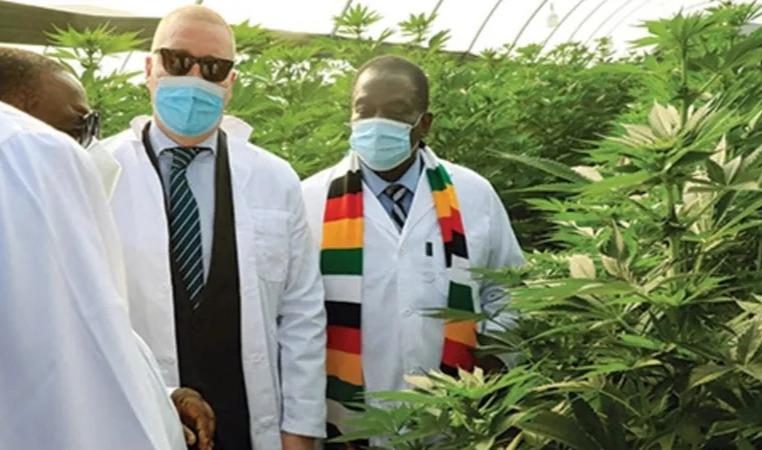
Ghana’s industrial and medicinal cannabis programme was launched in February 2026. The first cultivation licences were subsequently presented to MG Adom Limited and Juliotpa Limited for authorised cultivation of cannabis containing no more than 0.3% THC.
These are identifiable steps in establishing the regulatory framework. However, according to the information available to HAG, both licenses combined amount to eleven acres.
Your Excellency, can a combined eleven acres reasonably be presented as the foundation of a national hemp industry?
That question concerns the scale of our national ambition. Where is the development plan connecting licensed cultivation to substantial farmer participation, processing facilities, manufacturing and buyers? What intervention will enable prepared Ghanaian enterprises to establish the productive capacity required?
NACOC’s collaboration with the Council for Scientific and Industrial Research offers a starting point.
Its proposed activities include research into suitable seedlings and growing conditions, soil testing, traceability, model greenhouse farms and industrial and medicinal applications. CSIR has also identified potential uses for hemp fibre in alternative packaging and sanitary materials. These activities should be accompanied by clear funding, delivery dates and access arrangements for farmers and businesses.
For HAG, the immediate obstacle remains the financial burden of licensing. All the stakeholders consider the cultivation licence fees extortionate and a serious barrier to Ghanaian participation. An enterprise can have its farmers, technical preparations and market arrangements in place, yet remain unable to advance because of the cost of obtaining authorisation.
We are presenting a prepared enterprise seeking a defined intervention through an economic development programme. The programme would meet the applicable licence fees; investors would finance implementation once authorisation is secured. The minimum area of 90 hectares is approximately 222 acres. The preferred maximum of 404 hectares is approximately 998 acres, effectively the 1,000-acre scale we seek.
HAG would submit a costed implementation plan setting out the production arrangements, farmer participation model, staffing requirements, processing activities and delivery timetable. A supporting schedule would identify each applicable licence, its charge and the treatment of annual regulatory fees, establishing the precise amount requested from the programme. HAG will lead and manage implementation through its business plan, technical expertise and commercial partnerships.
Bringing the land into production, developing processing capacity and creating the proposed livelihoods are the business objectives driving this project. Responsibility for delivering them rests with HAG’s management, working with its farmers, investors and off-takers.
Your Excellency, this opportunity should also extend to other qualifying enterprises, cooperatives and farmer groups under published eligibility conditions. HAG’s requested acreage reflects our project’s requirements.
The wider programme should accommodate different scales of participation, including smaller farmers working through appropriate cooperative and out-grower arrangements. The ministries responsible for agriculture and trade and industry should have explicit enterprise development responsibilities alongside the Ministry of the Interior; since they are currently the overseers. The Ghana Standards Authority and relevant research institutions should contribute within their mandates.
Applicants need a named ministerial institution through which proposals can be submitted, assessed and coordinated. And accountability should extend beyond licences issued and
funding announced. The results should be visible in enterprises operating, farmers participating, land producing, processing facilities established, products reaching buyers and employment created. The programme should disclose both the support provided and the outcomes delivered
Your Excellency, Thatcher’s observations bring us back to the decision before us. Resources become economically valuable through people who can develop them, supported by policies that make enterprise possible. Your US$10 billion programme provides an opportunity to establish that connection in Ghana’s hemp industry. I respectfully request that HAG’s proposal be considered for this intervention and that an institution be designated to coordinate its assessment.
We are ready to present the supporting business plan and project arrangements. Payment of the applicable licence fees on our behalf would enable HAG to secure authorisation and proceed with investment and implementation. Your Excellency, this is a practical opportunity to turn your economic vision into productive activity and livelihoods. We ask that the New Economy programme provide the intervention that enables HAG to deliver its part.
Yours respectfully,
HEMPIRE AGRIC GHANA LTD.
CH EF EXECUTIVE OFFICER
Nana Kwaku Agyemang
Chief Executive Officer
Hempire Agric Ghana Limited
#HAG4 Lyf