
This report from MMJ Daily, published on 27 October 2026

In South Africa, licensed cannabis producers and the regulatory framework they answer to are still growing up
For a couple in Cape Town, that meant three years with the same facility on their minds, from the first plans to a license that arrived in August 2026, after a process that started in December 2024 and took a little more than a year and a half to complete.
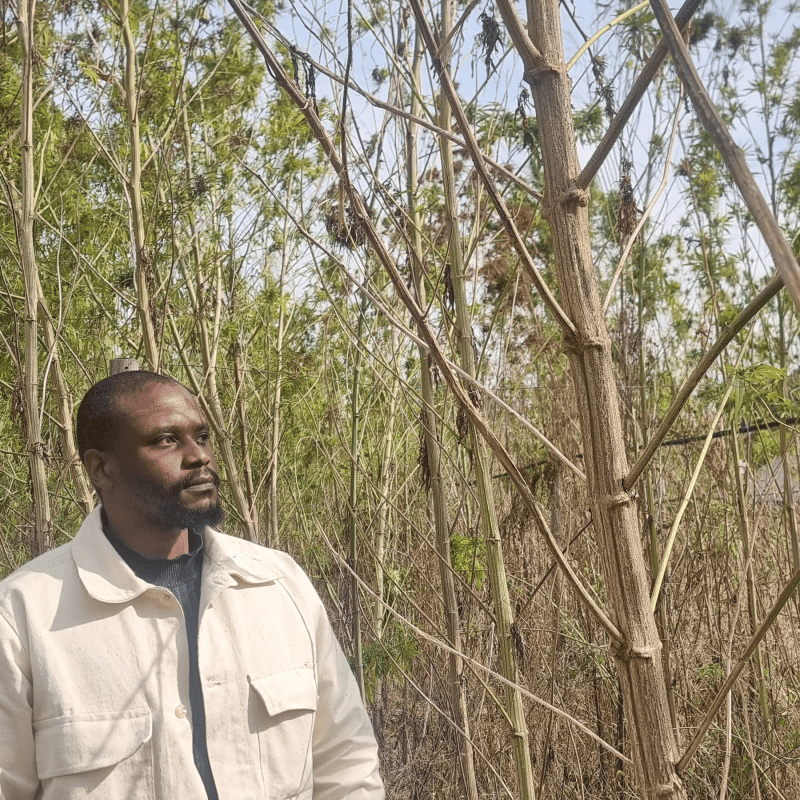
“One of the main challenges was the lack of clear guidance on certain processes and expected turnaround times. This made planning more difficult, but we kept working through the requirements, and our focus was to bring the right expertise into the business as we were adapting,” says Kim Praizovic (pictured here), who co-founded CannaGrit with her husband.
The company’s name stands for the drive to push through any challenge until success is achieved. “It has taken persistent teamwork to keep moving. Nothing happens on its own, you have to keep pushing to get everything done.”
Security was among the first things on the list when the couple went looking for a site, and the search ended in a warehouse in a Cape Town business park, where the team built everything from the ground up. Europe was the target from the start, so the team built the facility to adhere to EU-GMP guidelines, and the company keeps its scope narrow, growing and processing flower only, with post-harvest processing happening in-house.
One room at a time
Cultivation started a few weeks ago, in one of the four flower rooms, each around 80 square meters, of a facility comprising 547 square meters of cultivation and GMP processing space, under LED lights, with undercanopy lighting still to come, automated drip irrigation on ebb and flow benches, TrolMaster equipment and CO2 supplementation.
Running a single room first gives the team the time to start validation and find out what needs fixing before the other three come online. “The first cycle has helped us refine plant density and spacing. We decided that we will reduce the number of plants to give each one more room and improve access and light control.” A few physical adjustments to the environmental control followed too, as the team watched how the flowers react to airflow, among other things. “Overall, we are pleased with how the first cycle is progressing.”
That first batch finishes in late November, and the next room should follow within a few weeks. “We are targeting commercial supply in 2027, subject to completing the required validation work and meeting the requirements of our intended markets.
“For now, everything in the rooms grows from clones, a choice that gives the team more control at the beginning, while several strains go through trials to see how they behave in the environment. The aim is to keep only a few and dial them in perfectly, and only then move to mother plants of their own.
“We are looking at THC, that’s one part, but we think it’s quite important at the moment to get a really good terpene profile as well.”
The environment weighs on the selection too:
“Indoor cultivation gives us control over the environment, but genetics still respond differently. We are selecting strains that will consistently deliver the quality and performance we want under our conditions.”
CannaGrit brings together highly skilled quality professionals and legacy growers who have gone on to become experienced commercial growers.
“We recognize the value of their cultivation knowledge and experience. Because we produce cannabis for pharmaceutical purposes, a deep understanding of the plant and rigorous quality standards need to go hand in hand. Bringing that expertise together is crucial.”
Exporting from Cape Town
CannaGrit is targeting yields of 40 to 50 kg per batch, with the UK and Poland as its main intended markets.
Poland requires a market authorization process that takes some time. “We’re confident we can do our stability studies during the process and work toward that, but for Poland we are aiming for 2028, to be realistic.”
Germany is on the list too. “The UK and Poland are priority markets for us, and we are also open to German partners whose requirements match our batch sizes and quality standards.”
The Cape Town facility is the couple’s first project in South Africa, and a larger one is already part of the plans, still indoor and at a different location, with the aim of building it within a few years.
About Kim Praizovic (Linked In)
With over eight years of experience in the European cannabis market, Praizovic specialises in developing companies and building high-performing teams that operate to meticulous international production standards.
Her experience spans both cultivation operations and the European market access and QP release framework, providing insight into the full pathway from compliant production to commercial distribution. Her focus lies in aligning local production with global quality standards while creating scalable infrastructure for export-driven growth.
#